Coffee Cart Equipment Guide: What You Really Need for Success
Equipment quality determines coffee cart success more than any other factor besides location. The difference between commercial-grade and consumer equipment isn’t just durability, but consistent performance during peak periods when 50-100 customers expect quick service and reliable quality. Poor equipment choices create cascading problems including inconsistent drinks preventing premium pricing, frequent breakdowns losing customers and revenue, and inability to scale as business grows.
This comprehensive guide covers every essential piece of equipment needed for professional coffee cart operations, from espresso machines and grinders to water systems and supporting equipment that enables consistent, profitable service.
Table of Contents
- Equipment Investment Overview
- Commercial Espresso Machines
- Coffee Grinders
- Espresso Kits and Water Systems
- Refrigeration Equipment
- Power Systems and Management
- Point of Sale Systems
- Storage and Organization
- Maintenance and Cleaning Equipment
- Optional Equipment and Upgrades
- Equipment Buying Strategies
- Maintenance and Longevity
- Wrapping it up
Equipment Investment Overview
Coffee cart equipment represents 30-40% of total startup costs, making it the largest single expense category and the most critical factor determining operational success and customer satisfaction.
Total Equipment Budget Ranges
Minimum Viable Setup ($5,000-$8,000): Covers basic commercial equipment enabling quality coffee service but with limited capacity and features. Suitable for part-time operations or market testing before larger investment.
Professional Standard ($8,000-$15,000): Provides commercial-grade equipment supporting full-time operations with adequate capacity for typical daily volumes (50-150 drinks). This range represents the sweet spot for most coffee cart startups balancing quality with affordability.
Premium Operations ($15,000-$25,000): Includes top-tier equipment offering maximum reliability, capacity, and features supporting high-volume operations or multiple-cart businesses requiring consistent equipment across locations.
Equipment Priority Framework
Non-Negotiable Essentials (60-70% of budget):
- Commercial espresso machine
- Commercial coffee grinder
- Espresso kit (water system)
- Basic refrigeration
- Minimal power system
These items directly affect product quality and cannot be compromised without impacting customer satisfaction and revenue potential.
Important Supporting Equipment (20-30% of budget):
- POS system
- Storage solutions
- Cleaning equipment
- Basic organizational tools
These items improve operational efficiency and professionalism but offer more flexibility in specification and timing.
Optional Enhancements (10-20% of budget):
- Upgraded power systems
- Enhanced refrigeration
- Specialty equipment
- Advanced features
These additions improve operations but aren’t required for basic service, making them candidates for future upgrades once revenue stabilizes.
Commercial Espresso Machines
The espresso machine represents your cart’s centerpiece, directly affecting product quality, service speed, and customer perception of professionalism.
Understanding Machine Categories
Heat Exchanger Machines ($2,000-$5,000): Single boiler system using heat exchanger technology enabling simultaneous espresso brewing and milk steaming. These machines offer commercial capability at accessible prices, making them popular for coffee cart startups.
Advantages: Lower cost, adequate for moderate volume (30-60 drinks daily), simpler maintenance Limitations: Temperature stability challenges during high volume, slower recovery between drinks Best for: Startup operations, locations with moderate daily volume, budget-conscious operators
Dual Boiler Machines ($4,000-$8,000): Separate boilers for brewing and steaming providing superior temperature stability and simultaneous operation capability. These machines handle high-volume periods better while maintaining consistent extraction quality.
Advantages: Excellent temperature stability, faster service during rushes, consistent quality Limitations: Higher cost, more complex maintenance, greater power requirements Best for: High-volume locations, operators prioritizing quality consistency, established businesses
Key Machine Specifications
Group Head Configuration:
- Single group: Adequate for startups or low-volume locations (20-40 drinks daily)
- Two group: Standard for most coffee carts enabling faster service (40-80 drinks daily)
- Three group: High-volume operations or multi-operator service (80+ drinks daily)
Most coffee cart operators find single or two-group machines sufficient for typical daily volumes, with two-group configurations providing valuable capacity during peak morning rushes.
Boiler Capacity: Larger boilers (1.5-3 liters) provide better temperature stability and faster recovery between drinks. Small boilers (<1 liter) struggle during busy periods when multiple drinks require sequential preparation.
Power Requirements: Commercial machines typically require 1,800-3,000 watts, affecting power system design. Verify power requirements match available electrical capacity including generator or battery system capabilities.
Physical Dimensions: Measure cart counter space carefully before purchasing. Typical two-group machines require 24-30 inches width, 18-20 inches depth, and 16-18 inches height including clearance for portafilter removal.
Recommended Machine Models
Budget-Conscious Category ($1,500-$3,500):
- Rancilio Silvia Pro: Excellent heat exchanger machine with commercial features at accessible pricing
- Breville Dual Boiler: Prosumer machine with commercial capability suitable for moderate volume
- Profitec Pro 300: Reliable heat exchanger with good build quality
Professional Standard ($3,500-$6,000):
- Rocket Appartamento: Beautiful design with excellent build quality and reliability
- ECM Classika PID: Temperature stability and commercial durability
- Profitec Ride: Dual boiler performance with reasonable pricing
Premium Category ($6,000-$8,000):
- La Marzocco Linea Mini: Industry-standard quality in compact format
- Nuova Simonelli Appia: Commercial workhorse with proven reliability
- Rocket R9: Dual boiler excellence with rotary pump quiet operation
Machine Features Worth Paying For
PID Temperature Control: Electronic temperature management maintaining consistent brewing temperature within 1-2°F. This feature dramatically improves shot consistency particularly important during busy periods.
Rotary Pumps: Quieter and longer-lasting than vibratory pumps, though significantly more expensive. Rotary pumps also provide smoother pressure delivery improving extraction consistency.
Pre-Infusion: Gradual pressure ramp-up before full extraction improving shot quality particularly with lighter roasts or fresh beans. Many machines include adjustable pre-infusion enabling customization for different coffees.
Programmable Volumetrics: Automated shot volume control ensuring consistent serving sizes and enabling staff consistency regardless of experience level. Particularly valuable when training new employees or running multiple carts.
Coffee Grinders
Coffee grinder quality affects final cup quality as much as espresso machine selection. Fresh grinding immediately before brewing dramatically impacts flavor, making commercial-grade grinders essential rather than optional equipment.
Grinder Types and Selection
Stepped Grinders ($300-$600): Preset adjustment positions enabling consistent settings but less flexibility for fine-tuning. These grinders work well when using single coffee bean type but limit experimentation with different roasts or beans.
Advantages: Simple operation, consistent settings, adequate for single-origin focus
Limitations: Limited adjustment flexibility, difficult to dial in perfectly
Best for: Operators using single coffee supplier, simplified menu approach
Stepless Grinders ($600-$1,200): Infinite adjustment range enabling precise dialing-in for different beans, roast levels, or environmental conditions. Professional operators prefer stepless adjustment for flexibility and precision.
Advantages: Precision adjustment, flexibility for multiple coffees, optimal extraction
Limitations: Higher cost, requires more skill to dial in properly
Best for: Quality-focused operators, multiple bean offerings, experienced baristas
Critical Grinder Specifications
Burr Size and Type: Larger burrs (58-65mm) grind faster and stay cooler during high-volume periods compared to smaller burrs (40-50mm). Flat burrs provide consistent particle distribution while conical burrs excel at uniform grinding.
Grind Speed: Commercial grinders should produce espresso dose (18-20 grams) in 3-5 seconds. Slower grinding creates bottlenecks during busy periods when multiple drinks require sequential preparation.
Hopper Capacity: 1-2 pound hoppers suit most coffee cart operations balancing freshness with convenience. Larger hoppers (2-3 pounds) benefit high-volume locations while smaller hoppers (<1 pound) require frequent refilling during busy periods.
Dosing Capability: On-demand grinders provide freshest possible coffee by grinding only when needed but create wait times during service. Doser grinders pre-grind small amounts enabling faster service but sacrifice some freshness.
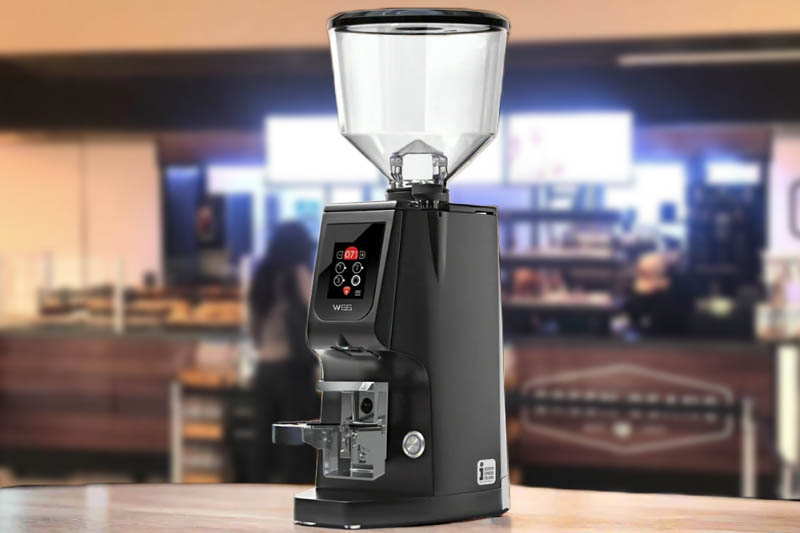
Eureka Atom 75 Coffee Grinder
Recommended Grinder Models
Budget Category ($300-$500):
- Baratza Sette 270: Excellent performance at accessible price point
- Eureka Mignon Specialita: Compact design with good grinding quality
- Rancilio Stile: Durable workhorse with adequate performance
Professional Standard ($500-$850):
- Mazzer Mini: Industry standard with proven reliability
- Eureka Atom: Commercial performance in compact package
- Baratza Forte: Advanced features with excellent consistency
Premium Category ($800-$1,200):
- Mazzer Super Jolly: High-volume commercial grinder
- Compak E8: Professional performance with durability
- Mahlkonig Peak: Fast grinding with excellent particle distribution
Grinder Features and Considerations
Stepless Adjustment: Infinite grind size adjustment enabling precise dialing-in for optimal extraction. This feature becomes more important when working with multiple coffee types or frequently changing beans.
Low Retention Design: Minimal coffee remaining in grinding chamber between doses ensuring freshness and reducing waste. Low retention designs particularly benefit operations using multiple coffee types or changing beans frequently.
Noise Level: Consider noise impact on customer experience. Quieter grinders (<70 decibels) improve atmosphere particularly in enclosed spaces or near customer interaction areas.
Cleaning Accessibility: Easy disassembly for regular cleaning maintains grinder performance and hygiene standards. Grinders requiring professional disassembly create operational disruptions and higher maintenance costs.
Espresso Kits and Water Systems
Mobile coffee operations require reliable water supply and drainage systems independent of permanent plumbing connections. Espresso kits provide essential infrastructure enabling professional coffee service anywhere.
Understanding Espresso Kit Components
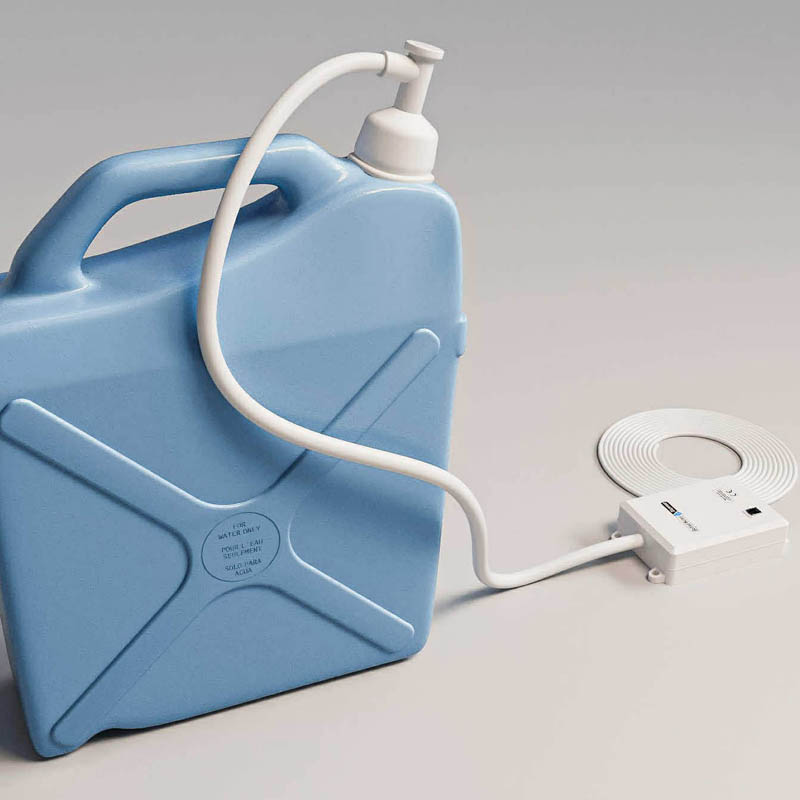
Fresh Water Reservoir: Food-grade tanks storing clean water for coffee brewing and hand washing. Commercial operations typically require 5-10 gallon capacity providing 4-6 hours of service before refilling.
Larger Capacity Benefits (8-10 gallons): Reduces refilling frequency during busy periods, enables longer service hours, provides backup capacity for unexpected demand surges.
Compact Options (5-7 gallons): Lighter weight for transportation, easier handling during setup, adequate for moderate daily volumes.
Electric Water Pump: Consistent pressure delivery (9-12 bar) required for espresso extraction. Electric pumps provide reliable performance unlike manual or gravity-fed systems that create pressure variations affecting shot quality.
Pump Specifications: Commercial pumps should deliver 100-150 PSI maximum pressure with flow rates of 1-2 gallons per minute. Variable speed pumps enable pressure profiling for advanced extraction techniques.
Waste Water Collection: Separate tank collecting spent water from brewing, cleaning, and equipment drainage. Waste capacity should match or exceed fresh water capacity preventing overflow during service.
Drainage Considerations: Systems should include overflow protection, easy emptying procedures, and secure connections preventing leaks during transportation or service.
Water Filtration: Remove impurities affecting taste and preventing mineral buildup damaging equipment. Commercial filtration systems remove chlorine, sediment, and minerals while leaving beneficial minerals for extraction.
Filtration Types: Carbon filters remove chlorine and taste issues, sediment filters protect equipment, and water softeners prevent calcium buildup in boilers and pipes.
Why Espresso Kits Are Essential
Mobility and Flexibility: Independent water systems enable operation in any location without plumbing requirements, dramatically expanding location possibilities compared to fixed coffee bars requiring water connections.
Operational Locations Enabled:
- Outdoor events and festivals lacking water infrastructure
- Office building lobbies without nearby plumbing
- Park and ride locations with no facilities
- Temporary event spaces and pop-up markets
- Transit stations with restricted plumbing access
Consistent Water Quality: Built-in filtration ensures consistent water quality regardless of location, eliminating water quality variations affecting taste between different sites.
Health Department Compliance: Commercial espresso kits meet health department requirements for mobile food service including adequate capacity, sanitary design, and proper drainage preventing contamination.
Equipment Protection: Filtered water prevents mineral buildup and scaling that damages espresso machines, extending equipment life and reducing maintenance costs.
Espresso Kit Specifications and Pricing
Standard Espresso Kit ($400-$600): Includes 5-7 gallon fresh water tank, electric pump, waste water collection, basic filtration, and all necessary connections.
Suitable for: Moderate volume operations (30-60 drinks daily), standard service hours (3-5 hours), budget-conscious startups
Professional Espresso Kit ($600-$800): Includes 8-10 gallon capacity, commercial-grade pump, advanced filtration, pressure gauges, and premium connections.
Suitable for: High-volume operations (60-100 drinks daily), extended service hours (6-8 hours), quality-focused operators
Premium Systems ($800-$1,200): Custom configurations with oversized capacity (10-15 gallons), redundant pumps, advanced filtration systems, and specialty features.
Suitable for: Multi-operator service, festival and event focus, maximum daily capacity needs
Installation and Integration
Professional Installation Benefits: Proper installation ensures leak-free connections, optimal pressure delivery, secure mounting, and warranty compliance. Professional installation typically costs $200-400 but prevents expensive problems from incorrect setup.
DIY Installation Considerations: Experienced operators can self-install following manufacturer instructions, though errors may void warranties or create operational issues requiring professional correction.
Integration Checklist:
- Secure tank mounting preventing movement during transportation
- Proper pump positioning for optimal performance
- Leak-free connections at all joints and fittings
- Easy access for refilling and emptying
- Filtration system proper installation and maintenance scheduling
- Overflow protection and drainage functionality testing
Maintenance and Care
Daily Procedures:
- Check water levels before service
- Empty waste water after service
- Rinse and sanitize tanks weekly
- Inspect connections for leaks
- Test pump pressure and flow rate
Regular Maintenance (Monthly):
- Replace filter cartridges per manufacturer schedule
- Deep clean all tanks and connections
- Inspect pump operation and pressure delivery
- Check all hoses for wear or damage
- Sanitize entire system with approved cleaners
Annual Service:
- Professional inspection of pump and pressure systems
- Complete system sanitization
- Filter housing inspection and replacement
- Connection and fitting replacement as needed
Refrigeration Equipment
Proper refrigeration maintains milk quality and food safety while enabling storage of dairy products, cold brew, and any add-on items offered with coffee service.
Refrigeration Requirements
Capacity Calculations: Plan refrigeration based on daily milk consumption plus 30-50% buffer. Most coffee cart operations use 2-4 gallons of milk daily requiring minimum 3-5 gallon refrigerated capacity.
Milk Consumption Estimates:
- 50 drinks daily: 2-3 gallons milk
- 100 drinks daily: 4-5 gallons milk
- 150 drinks daily: 6-8 gallons milk
Temperature Control Standards: Health departments require 40°F or below for dairy products. Commercial refrigeration should maintain 35-38°F providing buffer against door opening temperature spikes.
Recovery Time: Quality units recover to proper temperature within 15-20 minutes after door opening. Poor recovery creates food safety risks during busy periods with frequent access.
Refrigeration Options
Under-Counter Units ($600-$1,500): Compact refrigeration fitting beneath cart counters, maintaining coffee bar workflow while providing adequate capacity for daily needs.
Advantages: Space-efficient design, maintains workflow, adequate capacity Limitations: Higher cost per cubic foot, limited storage, specific size constraints Best for: Standard coffee cart operations, space-limited setups
Chest Style Units ($400-$900): Top-opening refrigeration offering maximum capacity in limited footprint, though requiring overhead clearance and creating accessibility challenges during service.
Advantages: Lower cost, excellent capacity, energy efficient Limitations: Difficult access during service, requires overhead space Best for: Prep and storage rather than service-period access
Display Refrigerators ($800-$2,000): Glass-front units showcasing products and enabling customer self-service or product awareness, particularly valuable for add-on sales.
Advantages: Product visibility, upselling opportunity, professional appearance Limitations: Higher cost, larger footprint, more power consumption Best for: Operations emphasizing add-on sales, premium positioning
Power and Efficiency Considerations
Power Draw: Refrigeration units typically require 100-300 watts continuous operation. Calculate total power requirements including refrigeration when designing electrical systems.
Insulation Quality: Better insulation reduces power consumption and maintains temperature stability during power interruptions or generator refueling.
Energy Efficiency: Look for Energy Star rated units reducing operational costs and enabling longer battery or generator operation between refueling or recharging.
Power Systems and Management
Coffee equipment requires significant electrical power, making power system design critical for operational reliability and location flexibility.
Power Source Options
Shore Power (Electrical Hookups): Direct connection to building or venue electrical systems providing unlimited power for extended operations.
Advantages: Unlimited capacity, lowest operating cost, no refueling needs Limitations: Requires electrical access, limits location flexibility, may require special permits Best for: Fixed locations, office building partnerships, venues with electrical access
Generator Systems ($800-$2,500): Gas or propane generators providing portable power enabling operation anywhere.
Advantages: Location independence, adequate capacity, proven reliability Limitations: Noise concerns, fuel costs, regular maintenance needs Best for: Outdoor locations, events, diverse location portfolio
Battery Systems with Inverters ($1,200-$3,000): Large battery banks with power inverters converting DC to AC for equipment operation.
Advantages: Quiet operation, no emissions, simple maintenance Limitations: Limited capacity, expensive initial investment, weight considerations Best for: Indoor venues, noise-sensitive locations, premium positioning
Calculating Power Requirements
Total Equipment Wattage:
- Espresso machine: 1,800-3,000 watts
- Grinder: 200-400 watts
- Refrigeration: 100-300 watts
- POS system: 50-100 watts
- Lighting and accessories: 50-150 watts Total: 2,200-4,000 watts typical
System Sizing: Power systems should provide 20-30% surplus capacity beyond total equipment requirements preventing overload and enabling future expansion.
Generator Sizing Example: For 3,000 watts total equipment, specify minimum 3,600-4,000 watt generator capacity ensuring reliable operation and equipment protection.
Power Management Best Practices
Startup Sequencing: Turn on equipment sequentially rather than simultaneously preventing startup surge overwhelming power systems.
Load Management: Monitor power consumption during service adjusting equipment usage to prevent overload. Consider turning off grinder or refrigeration briefly during espresso machine peak draws.
Backup Planning: Maintain backup power solutions including spare batteries, extra fuel, or alternative location power sources preventing revenue loss from power failures.
Point of Sale Systems
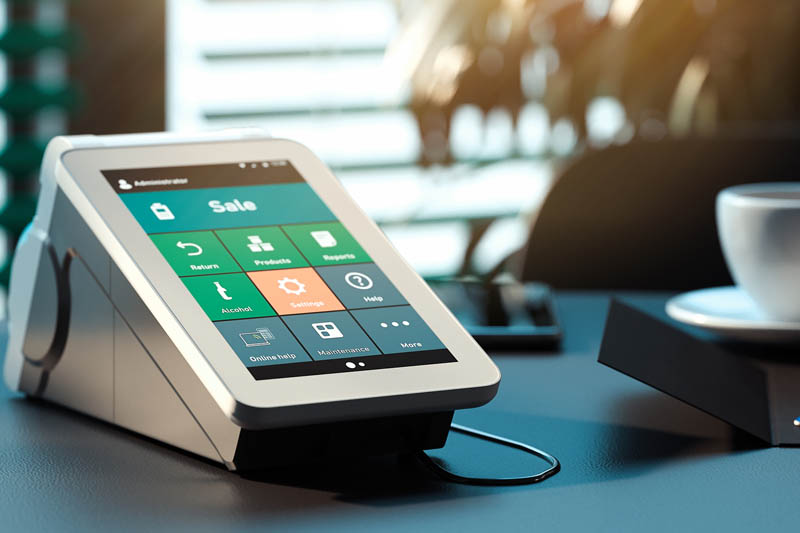
Modern POS systems provide more than payment processing, offering inventory tracking, sales analytics, and customer relationship management enabling business optimization.
POS System Selection
Mobile Payment Solutions ($0-$50 monthly + processing fees): Tablet or smartphone-based systems offering basic functionality at minimal upfront cost.
Options: Square, PayPal Here, SumUp Processing Fees: 2.6-2.9% + $0.10-0.30 per transaction Best for: Startups, simple operations, minimal reporting needs
Dedicated POS Systems ($300-$800 + $30-$100 monthly): Purpose-built systems offering advanced features including inventory management, employee tracking, and detailed analytics.
Options: Toast, Clover, Shopify POS Processing Fees: 2.3-2.7% + $0.10-0.15 per transaction Best for: Professional operations, inventory management needs, multi-location businesses
Essential POS Features
Payment Flexibility: Accept cash, credit cards, debit cards, mobile payments (Apple Pay, Google Pay), and contactless cards accommodating all customer payment preferences.
Offline Capability: Continue accepting payments during internet outages syncing transactions when connectivity restores, preventing revenue loss from connectivity issues.
Inventory Tracking: Monitor product usage, identify bestsellers, and flag low stock preventing stockouts during service periods.
Sales Analytics: Track sales by time, product, location, and employee providing insights for menu optimization, staffing decisions, and pricing strategies.
Customer Data: Collect customer information enabling loyalty programs, targeted marketing, and repeat customer analysis.
Storage and Organization
Efficient storage maximizes limited cart space while enabling smooth operations during busy periods when organization prevents delays and errors.
Essential Storage Solutions
Ingredient Storage: Airtight containers for coffee beans, food-safe containers for syrups and flavorings, and easily accessible locations for frequently used items.
Supply Storage: Organized storage for cups, lids, stirrers, napkins, and other consumables enabling quick restocking during service without searching or delays.
Cleaning Supply Organization: Designated storage for sanitizers, cleaning cloths, and maintenance supplies separate from food items meeting health department requirements.
Personal Item Storage: Secure storage for personal belongings, cash funds, and valuables preventing loss and maintaining professional appearance.
Organization Best Practices
Workflow Optimization: Position frequently used items within arm’s reach of primary work area minimizing movement during busy periods when efficiency determines customer capacity.
Visual Organization: Clear labeling, color coding, or transparent containers enabling quick identification and reducing errors particularly helpful when training new staff.
First-In-First-Out Systems: Organize inventory to use oldest products first preventing waste from expiration and maintaining product freshness.
Maintenance and Cleaning Equipment
Proper cleaning and maintenance protect equipment investment while ensuring health department compliance and consistent product quality.
Essential Cleaning Equipment
Backflushing Supplies: Blind baskets and commercial cleaning powder for espresso machine backflushing removing coffee oils and residue preventing buildup affecting taste.
Grinder Brushes: Specialized brushes reaching grinder burrs and chambers removing retained coffee preventing stale flavors and maintaining grind consistency.
Descaling Solutions: Commercial descalers removing mineral buildup from boilers and pipes extending equipment life and maintaining proper function.
Sanitizing Solutions: Food-safe sanitizers meeting health department requirements for surface cleaning and equipment sanitization.
Cleaning Cloths: Microfiber cloths for equipment wiping, separate cloths for different cleaning tasks preventing cross-contamination.
Maintenance Tools
Pressure Gauge: Verify espresso machine brewing pressure ensuring proper extraction and detecting problems before affecting product quality.
Thermometer: Verify milk steaming temperature and refrigeration temperature ensuring product quality and food safety compliance.
Basic Tool Kit: Screwdrivers, wrenches, and Allen keys for minor adjustments and maintenance preventing service calls for simple issues.
Optional Equipment and Upgrades
Additional equipment enhances operations, improves efficiency, or enables menu expansion though isn’t required for basic coffee cart service.
Cold Brew Systems ($200-$600)
Commercial cold brew towers or systems producing consistent cold brew concentrate enabling premium cold drink offerings during warm weather.
Revenue Potential: Cold brew commands $4-6 pricing with 80-85% margins, potentially adding $50-100 daily revenue during summer months.
Nitro Cold Brew Systems ($800-$2,000)
Nitrogen infusion systems creating creamy, smooth cold brew on tap with dramatic presentation appealing to premium customers.
Considerations: Requires nitrogen tanks (ongoing expense), regular cleaning, and adequate storage for kegs, but enables premium pricing ($6-8) and differentiation.
Blender Systems ($200-$500)
Commercial blenders for frozen drinks, smoothies, or blended coffee beverages expanding menu options and seasonal opportunities.
Revenue Considerations: Frozen drinks add complexity slowing service during rushes but provide warm weather alternatives and higher average transactions ($6-9).
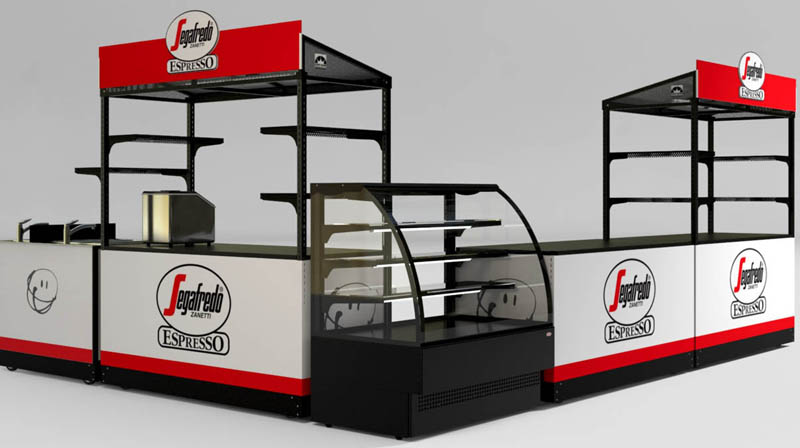
Display Cases ($200-$800)
Refrigerated or dry display cases showcasing pastries, packaged snacks, or retail products encouraging add-on purchases through visibility.
Upselling Impact: Product visibility increases add-on sales by 25-40% compared to hidden storage, boosting average transactions by $2-4.
Triple coffee carts with a display case
Equipment Buying Strategies
Strategic equipment purchasing balances quality, budget, and timing while avoiding common mistakes that create expensive problems.
New vs. Used Equipment
New Equipment Advantages:
- Manufacturer warranty (1-3 years typical)
- Known operating history
- Latest features and efficiency
- Financing options often available
Used Equipment Considerations:
- 40-60% cost savings
- Unknown maintenance history
- Potential hidden problems
- Limited or no warranty
Hybrid Approach: Purchase critical equipment (espresso machine, grinder) new while buying supporting equipment (refrigeration, storage) used balancing quality with budget.
Financing Options
Equipment Financing: Specialized lenders offering 3-5 year terms for coffee equipment using equipment as collateral.
Typical Terms: 8-15% interest rates, $15,000-$50,000 loan amounts, monthly payments enabling revenue generation before full payment.
Lease Options: Monthly equipment leasing avoiding large upfront costs but increasing total cost 25-40% over purchase.
Timing Considerations
Off-Season Purchasing: Equipment suppliers often discount inventory during slow seasons (November-February) providing opportunities for savings.
Package Deals: Buying multiple items from single supplier often generates discounts (10-20%) compared to piece-by-piece purchasing.
Refurbished Options: Manufacturer-refurbished equipment offers warranty coverage with substantial savings (30-50%) compared to new equipment.
Maintenance and Longevity
Proper maintenance extends equipment life, prevents expensive breakdowns, and maintains consistent product quality essential for customer satisfaction.
Daily Maintenance Procedures
Espresso Machine:
- Backflush with water after service
- Wipe steam wands and group heads
- Empty and rinse drip trays
- Check water tank levels
Grinder:
- Brush burrs and chamber
- Check hopper for stale beans
- Verify grind consistency
- Clean dosing mechanism
General Equipment:
- Wipe all surfaces with sanitizer
- Check refrigeration temperature
- Inspect connections for leaks
- Test all equipment function
Weekly Maintenance
Espresso Machine:
- Chemical backflush with cleaning powder
- Soak portafilters and baskets
- Check water filtration system
- Inspect gaskets and seals
Grinder:
- Deep clean burrs and chamber
- Check burr alignment and wear
- Clean hopper thoroughly
- Lubricate moving parts per manufacturer
Monthly Maintenance
Espresso Machine:
- Descale boilers and pipes
- Replace water filters
- Inspect pump operation
- Check pressure gauges
All Equipment:
- Professional inspection recommended
- Deep cleaning of all systems
- Parts replacement as needed
- Performance verification
When to Call Professionals
Immediate Professional Service Needed:
- No water flow or pressure
- Unusual noises or leaks
- Electrical issues or failures
- Temperature control problems
Regular Professional Service: Schedule annual or bi-annual professional maintenance preventing problems while maintaining warranty coverage.
Wrapping it up
Coffee cart equipment investment significantly impacts operational success, customer satisfaction, and long-term profitability. Quality equipment enables consistent products, efficient service, and professional operations that justify premium pricing and generate customer loyalty.
Equipment Investment Priorities
Essential Core Equipment (Espresso machine, grinder, espresso kit): These items directly affect product quality and cannot be compromised without impacting customer satisfaction and revenue potential.
Supporting Equipment (Refrigeration, POS, organization): Important for professional operations but offering more flexibility in specification and timing.
Optional Enhancements (Cold brew, displays, upgrades): Improve operations but aren’t required initially, making them good candidates for future expansion.
Key Success Principles
Buy Quality for Critical Equipment: Espresso machines and grinders determine product quality making them poor candidates for extreme budget constraints. Invest in proven commercial equipment from reputable manufacturers.
Espresso Kits Enable Mobility: Independent water systems dramatically expand location possibilities while ensuring consistent water quality and health department compliance.
Match Capacity to Volume: Right-size equipment for actual needs rather than aspirational volumes. A $3,000 machine serving 40 daily drinks provides better value than $8,000 machine serving same volume.
Plan for Maintenance: Budget ongoing maintenance costs (5-10% of equipment value annually) preventing deferred maintenance that creates expensive breakdowns.
Start Essential, Upgrade Later: Begin with core equipment enabling quality service, adding optional equipment as revenue justifies expansion rather than overinvesting before proof of concept.
Ready to develop your complete coffee cart business plan? Explore our comprehensive guides on research and purchasing, location selection strategies, and menu development for complete planning resources.

What you can read next