Buying a food cart in the US – What you need to know
If you are considering buying a food cart in the US, there is a lot of information that is worthwhile knowing that may not apply in other countries, such as Europe or Asia. As they also say, the best decision is an informed decision.
In this guide, then, not only will we talk about all you need to know about buying a food cart, we will also discuss the upkeep, the additional expenses, the costs you will want to know about to create a food cart business plan and also for starting a food cart business.
At the end, we’ll add it all up so that you can see what it costs to start a mobile business. There is a lot here and a lot of time went into preparing this guide for you, so let’s get started and dive right in.
Table of contents
- Cost of buying a food cart
- Ensuring your food cart meets health regulation compliance
- Licenses and Permits to operate a street food cart business
- General costs of starting and operating a food cart business
- Wrapping it up
Cost of buying a food cart
A mobile kitchen is an excellent way to break into the food business. When you’re buying a cart, consider not just the price, but the quality and materials. Used carts may seem cheaper, but can cost more in repairs or compliance upgrades.
Total cost: $4,000 – $20,000
Related resource: Explore our Food Carts for Sale
Ensuring your food cart meets health regulation compliance
Every state requires food health and handling rules to keep street food safe. Regulations include using portable sinks and food-grade materials in your mobile vending cart. Typically, you need three sink basins of a specified size and materials that meet food safety standards. The USDA Food Safety Guidelines and FDA Food Code outline what’s needed to operate a compliant mobile kitchen.
If you’re serving open foods like hot dogs or tacos, your cart needs to meet these requirements. Local health departments will inspect your cart before issuing a permit.
Total cost: $0 – $1,000
External links:
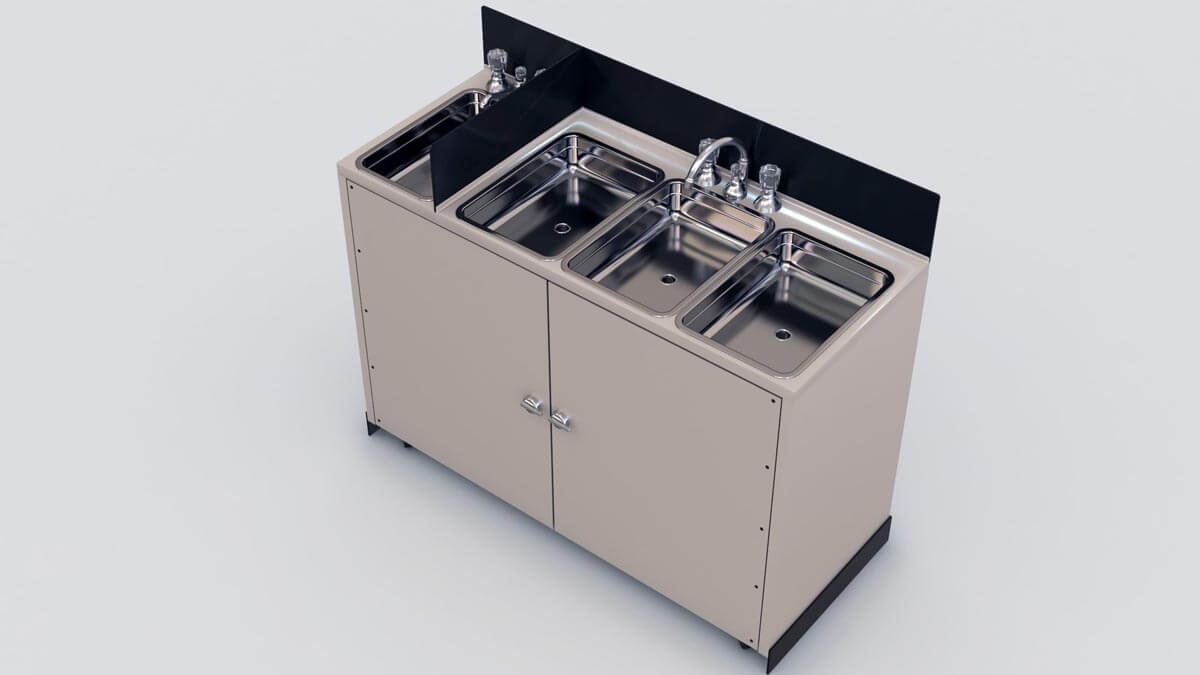
An example of a self-contained portable sink that meets USA food handling regulations.
Licenses and Permits to operate a street food cart business
Before you can take to the streets, you’ll need to secure the right licenses and permits. These ensure your food cart business follows local rules and health codes, helping you avoid fines and operate with confidence.
1) Business registration
Every state requires your food cart business to be officially registered. This process legitimizes your venture, making it easier to open a bank account and work with suppliers. Costs vary widely depending on the city and county.
Total cost: $25 to $1,000
2) Health Department permit
You’ll need a Health Department Permit to legally operate a food cart. Local health departments ensure compliance with food safety standards and proper sanitation practices, including handwashing stations and portable sinks.
Total cost: $0 to $1,000
External Resource: Local Health Department resources
3) Food Managers Permit
Some states require a certified food manager to be on-site during operating hours. This involves completing a food safety course and passing an exam. It’s an investment in your business’s reputation and food safety practices.
Total cost: $100 to $500, renewable every few years
4) Street vendor license
To sell food in public spaces like sidewalks or parks, you’ll usually need a local street vendor license. This is crucial for accessing busy, high-foot-traffic areas.
Total cost: Up to $500 per year, depending on city regulations
5) Fire department permit
If your food cart has built-in cooking equipment, it needs a fire safety inspection and permit. This helps ensure your equipment won’t pose a fire hazard in public spaces.
Total cost: $25 to $300 per year
6) Federal tax permit (Employer Identification Number, or EIN)
You’ll need an Employer Identification Number (EIN) from the IRS if you plan to hire staff or pay federal taxes. It’s free, but essential for managing taxes and legal obligations.
Total cost: Free, though you’ll still need to file taxes on your earnings
Why this matters:
These permits ensure you’re legally allowed to operate and protect your business from fines or closures. Check your city or county for exact requirements.
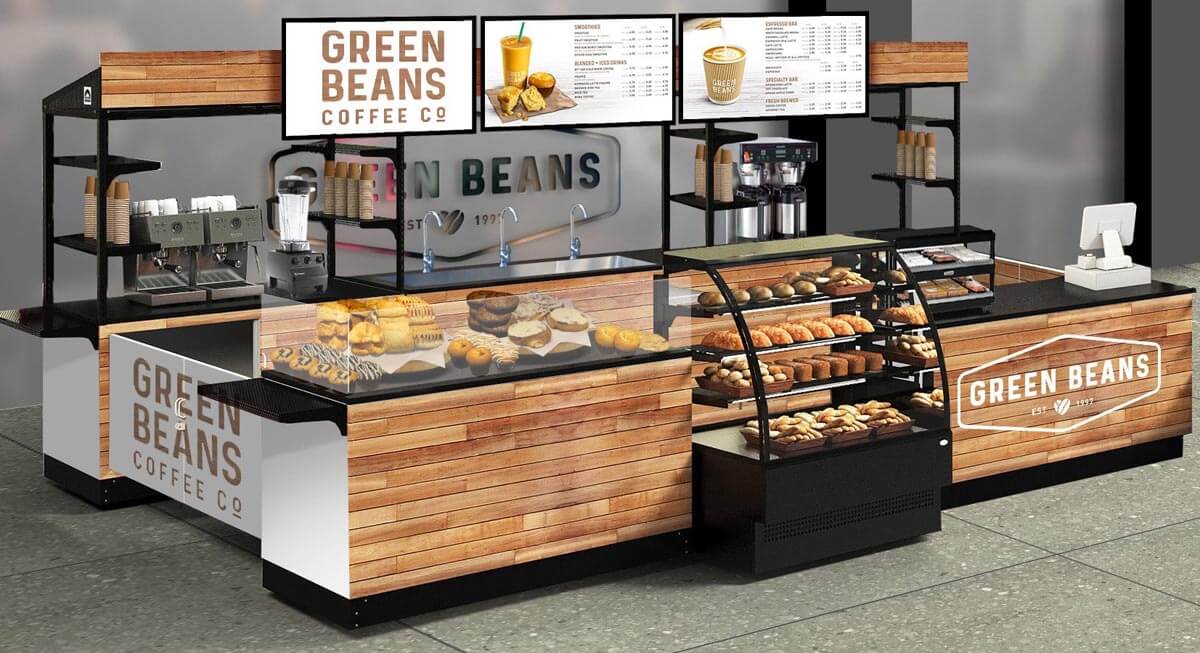
An example of a customized and branded mobile food cart setup
General costs of starting and operating a food cart business
Now you have a general idea of the initial considerations to make when buying a food cart and the licenses and permits you may need. Let’s dig into some of the general costs you will want to consider when starting a food cart business.
1) Commercial kitchen rental agreement
Some areas require you to prep food in licensed commissaries. Costs depend on location and prep needs.
2) Initial Inventory and Equipment
- Inventory: Stocking your cart means more than just ingredients. You’ll need napkins, takeout containers, and packaging that suits your brand. Starting small helps test demand and refine your offerings.
- Equipment: You might spend money on display fridges, small appliances, and cooking gear to support your menu. Costs can also include utensils, storage bins, and cleaning tools.
Total cost: $1,000 to $3,000
3) Business Insurance
Liability insurance is essential for protecting your food cart against unexpected accidents or damage claims. Most policies cover slip-and-fall incidents, food safety issues, or equipment-related risks.
Total cost: $400 to $1,000 annually
4) Operational Expenses
Power, cleaning supplies, and routine upkeep are part of keeping your cart running smoothly. Consider the need for portable sinks and any regular maintenance.
Total cost: $50 to $100 per month
5) Staffing
If you plan to hire staff, wages will be your largest recurring expense. Don’t forget to include taxes and other employer obligations.
Total cost: $2,000 to $4,000 monthly per employee
6) Maintenance
Keeping your cart clean and in working order ensures smooth operations and avoids costly repairs later. Regular cleaning and small repairs are part of your daily or weekly routine.
Total cost: $50 to $100 monthly for cleaning and maintenance supplies
7) Marketing and Advertising
Getting the word out is critical for success. Paid ads, social media posts, flyers, and local sponsorships can build your brand and customer base.
Total cost: $100 to $300 monthly
Internal resource: Learn about Social Media Marketing for Food Carts
8) Unexpected Costs
Administrative work can include things like accounting and bookkeeping, tax remittances, legal obligations, maintaining regulatory compliance. You may want to spend between $500 and $2500 annually so you can focus on running the business.
And, finally, things don’t always go to plan. A rainy-day fund ensures you’re covered for surprise repairs or sudden vendor fees.
Total cost: $1,000 to $2,500
Why this matters:
Covering these startup and operational costs ensures your food cart is compliant, competitive, and profitable.
Wrapping it up
As we mentioned at the start of this guide, here’s a clear look at what it costs to start your food cart business:
- Food Cart: $4,000 to $20,000
- Licenses: $250 to $3,300
- Inventory: $200 to $500
- Equipment: $1,000 to $3,000
- Insurance: $400 to $1,000
- Operational: $50-100
- Staffing (Optional): $2000 to $4000
- Maintenance: $50 to 100
- Marketing (Optional): $100 to $300
- Unexpected Costs: $1000 to $2500
So, the total investment to launch your food cart business can range from approximately $6950 to $34,800 USD.
Not every vendor will need every permit or incur all these costs. But this gives you a realistic idea of what it takes to get rolling.
At Cart-King, we believe that your success is our success. That’s why we share these details and provide expert advice to help you choose the best cart for your needs and navigate the setup process.
We’re here to help you bring your food cart business vision to life, and get your street food sales rolling!