Coffee Cart Menu Planning and Pricing Strategy
Menu development and pricing strategy determine coffee cart profitability more than most operators realize. The difference between a well-engineered menu and a haphazard approach can mean 20-30% variation in profit margins despite similar sales volumes. Coffee cart menus must balance customer expectations with operational efficiency while maximizing profit margins through strategic item selection and pricing decisions.
This comprehensive guide provides systematic approaches to developing profitable coffee cart menus, pricing strategies that maximize revenue, and operational considerations that ensure consistent execution during busy service periods.
Table of Contents
- Menu Development Principles
- Core Coffee Offerings
- Specialty and Seasonal Drinks
- Add-On Revenue Opportunities
- Menu Size and Complexity
- Pricing Strategy Development
- Cost Analysis and Margin Calculation
- Psychological Pricing Tactics
- Seasonal Menu Planning
- Menu Engineering and Optimization
- Operational Efficiency Considerations
- Menu Testing and Refinement
- Wrapping it up
Menu Development Principles
Coffee cart menu development requires balancing customer desires with operational realities including limited space, equipment constraints, and service speed requirements during peak periods.
The Coffee Cart Menu Challenge
Unlike traditional cafes with extensive equipment and multiple staff members, coffee carts face unique constraints requiring strategic menu design. Limited counter space restricts equipment options, single-operator service during most hours demands efficiency, and peak hour concentration (60-70% of sales in 3-hour morning window) makes service speed critical.
Space Limitations: Typical coffee cart counter space measures 8-12 linear feet, constraining equipment to espresso machine, grinder, small refrigeration, and minimal prep area. This footprint limits menu complexity compared to traditional cafes with 20-30 feet of counter space and back-of-house prep areas.
Equipment Constraints: Most coffee carts operate with single-group or two-group espresso machines, single grinder, and limited refrigeration affecting menu capabilities. Complex preparations requiring multiple pieces of equipment or extensive ingredient storage become impractical.
Service Speed Requirements: Morning rush periods demand 2-3 minute service times from order to delivery. Menu items requiring longer preparation create bottlenecks that lose customers and revenue during crucial peak hours generating majority of daily revenue.
Menu Development Framework
Customer Expectation Baseline: Research local coffee shop offerings to understand baseline customer expectations. Markets accustomed to extensive menus (15-20+ drinks) may find minimal offerings inadequate, while markets with simpler coffee traditions accept streamlined menus.
Operational Capacity Assessment: Honestly evaluate operational capabilities including equipment capacity, operator skill level, and service speed potential. Menus should showcase strengths while avoiding items exceeding operational capabilities.
Competitive Differentiation: Identify gaps in local offerings enabling differentiation through unique items, superior quality, or better value rather than trying to match competitors’ full menus with limited resources.
Profit Margin Optimization: Prioritize high-margin items that use similar ingredients and preparations, simplifying inventory while maximizing profitability through focused offerings.
Core Coffee Offerings
Core menu items represent foundation offerings that satisfy majority of customers while providing operational efficiency through shared ingredients and similar preparations. Here are some examples of what you will want to consider offering on a daily basis.
Essential Espresso Drinks
Espresso and Americano: Single and double espresso shots plus americano (espresso with hot water) satisfy traditional coffee drinkers while requiring minimal preparation time (60-90 seconds).
Margin Analysis: 85-90% gross margins with ingredient costs $0.40-0.60 per serving and typical pricing $2.50-3.50. These drinks provide excellent profitability despite lower average transaction compared to milk-based drinks.
Operational Efficiency: Fastest preparation times enabling efficient service during rushes when customers seek quick coffee without milk-based complexity.
Cappuccino: Equal parts espresso, steamed milk, and foam creating classic Italian coffee drink. Cappuccino represents menu essential satisfying traditional preferences while demonstrating espresso bar competence.
Recipe Standard: 2 shots espresso (2 oz), 2 oz steamed milk, 2 oz foam in 6 oz cup. Consistency requires attention to milk texture and temperature (140-150°F) maintaining quality standards.
Pricing Strategy: $4.00-5.50 typical pricing with $0.75-1.00 ingredient costs generating 80-85% gross margins.
Latte: Espresso with steamed milk and light foam, representing highest-volume menu item at most coffee operations. Latte provides canvas for flavor variations without menu complexity.
Size Variations: Offer 12 oz, 16 oz, and 20 oz options enabling customer choice while encouraging upselling through size-based pricing strategies.
Ingredient Costs: $0.80-1.20 per serving depending on size with pricing $4.50-6.50 generating 75-82% gross margins.
Macchiato: Espresso marked with small amount of foam, bridging straight espresso and milk-based drinks. Both traditional (espresso with foam mark) and modern (reverse proportions) versions exist, requiring clarification on menu or through customer education.
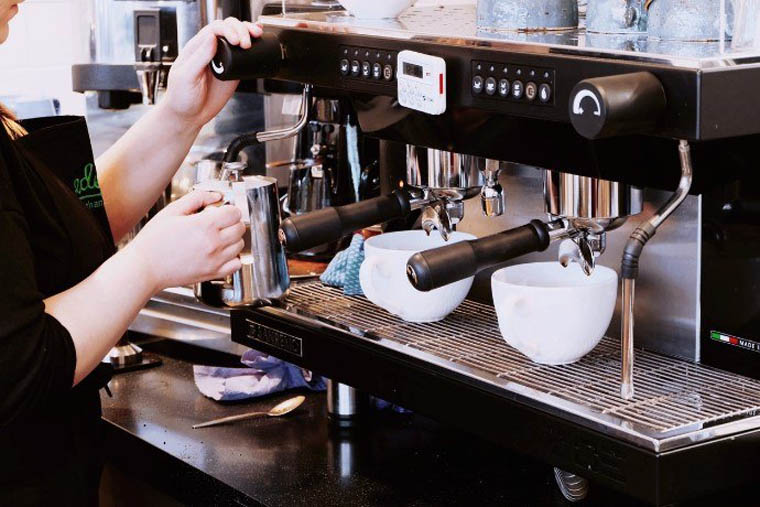
Espressos should be part of your core coffee offerings
Drip Coffee Options
Regular and Decaf Drip Coffee: Traditional brewed coffee satisfies customers preferring simple, quick service over espresso preparations. Drip coffee provides highest margins (88-92%) while enabling fastest service during rushes.
Equipment Considerations: Thermal airpot brewers maintain temperature without heating elements, providing portable service capability essential for cart operations. 2-3 liter capacity provides 15-20 servings before rebrew.
Pricing Strategy: $2.50-3.50 pricing with $0.20-0.30 costs generates exceptional margins while providing value positioning for price-conscious customers.
Coffee Quality: Invest in quality beans and proper brewing procedures preventing commodity coffee perception. Good drip coffee can be excellent value proposition rather than inferior alternative to espresso drinks.
Cold Coffee Options
Iced Coffee: Drip coffee served over ice with optional milk and sweetener. Simple preparation using regular brewed coffee makes iced coffee operationally efficient warm weather offering.
Preparation Method: Brew coffee at normal strength then cool before service preventing dilution from ice melting. Alternatively, brew double-strength and serve immediately over ice.
Pricing: $3.00-4.50 with margins similar to hot drip coffee (85-90%) making iced coffee profitable warm weather staple.
Cold Brew: Coffee steeped in cold water for 12-24 hours creating smooth, low-acid concentrate served over ice. Cold brew commands premium pricing ($4.50-6.00) while offering excellent margins (80-85%) and differentiation from standard iced coffee.
Operational Considerations: Requires advance preparation (12-24 hour steep time) and refrigerated storage, but single batch produces 20-40 servings making daily preparation feasible.
Iced Lattes and Cold Espresso Drinks: Espresso over ice with cold milk creating cold versions of traditional espresso drinks. These items extend espresso menu into warm weather while maintaining familiar drink structure.
Specialty and Seasonal Drinks
Specialty offerings create excitement, can command premium pricing, and differentiate your cart from competitors while maintaining operational feasibility. A well-crafted specialty latte will often end up being shared on social media, offering your coffee cart free publicity.
Signature Drink Development
Unique Combinations: Develop 1-2 signature drinks combining flavors, preparations, or presentations unavailable from competitors. Signature drinks create talking points and social media content while justifying premium pricing.
Examples: Honey lavender latte, cinnamon vanilla cold brew, cardamom spiced cappuccino, orange mocha, maple bourbon latte (non-alcoholic).
Ingredient Selection: Use ingredients that enhance coffee rather than overwhelming it. Subtle flavors (vanilla, honey, cinnamon) complement coffee while bold flavors (artificial syrups, excessive sweeteners) mask quality.
Recipe Standardization: Document exact recipes including quantities, preparation methods, and presentation ensuring consistency regardless of operator. Signature drinks lose appeal when quality varies between preparations.

Specialty coffees can command premium pricing
Seasonal Offerings
Summer Specials: Cold drinks emphasizing refreshment through fruit infusions, iced options, or frozen preparations. Summer drinks should feel light and refreshing rather than heavy or warming.
Examples: Iced vanilla latte, cold brew with vanilla sweet cream, mint mocha iced coffee, coconut cold brew, strawberry latte.
Fall/Winter Drinks: Warming spices and comfort flavors align with cold weather preferences. These drinks provide seasonal excitement while maintaining operational efficiency.
Examples: Pumpkin spice latte, gingerbread latte, peppermint mocha, cinnamon dolce latte, eggnog latte (using actual eggnog).
Holiday Specials: Limited-time holiday drinks create urgency and excitement during slower winter months. Holiday drinks often command premium pricing ($6-7) due to seasonal ingredient costs and limited availability.
Flavored Latte Options
Syrup Offerings: Provide 3-6 syrup flavors enabling simple customization without menu complexity. Vanilla, caramel, and hazelnut represent universal favorites, while seasonal flavors rotate quarterly.
Syrup Strategy: Offer syrup additions for $0.50-0.75 upcharge rather than creating separate menu items for each flavored latte. This approach simplifies menu presentation while maximizing customization options.
Quality Considerations: Use high-quality syrups (Torani, Monin) rather than artificial options. Quality ingredients justify premium pricing while providing better flavor that doesn’t mask coffee quality.
Add-On Revenue Opportunities
Strategic add-on items boost average transactions by $2-4 while requiring minimal additional operational complexity, significantly improving daily revenue and profitability. A good business owner will always be looking for and testing add-on, or “upsell” products, just like the chain brick-and-mortar cafés.
Pastry and Food Items
Pastries: Muffins, croissants, scones, or cookies complement coffee purchases while providing substantial profit margins (60-70%) and boosting average transactions.
Sourcing Strategy: Partner with local bakeries for fresh daily delivery avoiding baking requirements and inventory waste. Many bakeries offer wholesale pricing (40-50% of retail) enabling profitable resale.
Operational Integration: Display pastries in visible location encouraging impulse purchases. Individually wrapped items simplify handling and meet health department requirements for most mobile operations.
Revenue Impact: Successfully selling pastries to 25-30% of customers increases average transactions by $2.50-3.50, adding $50-100 daily revenue without proportional cost increases.
Packaged Snacks
Grab-and-Go Options: Packaged granola bars, protein bars, or trail mix provide quick add-on sales with long shelf life and minimal health department complexity.
Margins and Pricing: Purchase wholesale at $0.75-1.25 per item, retail at $2.50-3.50 generating 60-70% margins while providing customer convenience.
Storage and Display: Packaged items require minimal refrigeration or special handling, making them ideal for cart operations with limited space and capabilities.
Retail Coffee Bean Sales
Whole Bean Sales: Offer packaged coffee beans from your primary roaster enabling customers to recreate favorite drinks at home while generating additional revenue from existing inventory.
Pricing Strategy: Retail at $15-18 per 12 oz bag with wholesale costs $8-10, generating 40-50% margins while requiring no additional equipment or preparation.
Marketing Benefit: Bean sales create ongoing connection with customers between cart visits while demonstrating coffee quality and expertise.
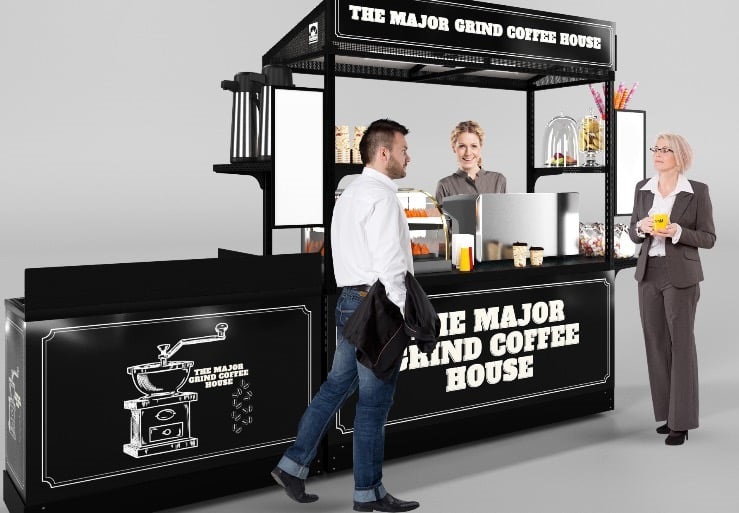
The Major Grind Coffee
Coffee cart offering pastries
Menu Size and Complexity
Strategic menu sizing balances customer choice with operational efficiency, directly affecting service speed and consistency during crucial peak revenue periods.
The Service Speed Impact
Time Per Menu Item: Each additional menu item increases average service time 5-10 seconds through customer decision time and operator complexity. Extensive menus (15+ items) can add 30-60 seconds to average service time compared to streamlined menus (8-10 items).
Peak Hour Mathematics: During morning rush, 30-second service delays reduce daily customer capacity by 20-30%, directly impacting revenue. Location with 3-hour morning peak and 2.5 minute average service supports 72 customers versus 54 customers with 3.5 minute service times (33% capacity reduction).
Revenue Impact Calculation:
- Efficient menu (2.5 min service): 72 customers × $5.50 average = $396
- Complex menu (3.5 min service): 54 customers × $5.50 average = $297
- Lost daily revenue: $99 or $24,750 annually (250 operating days)
Optimal Menu Size
Recommended Menu Structure:
- 3-4 core espresso drinks (espresso, americano, cappuccino, latte)
- 2-3 coffee options (drip regular/decaf, cold brew or iced coffee)
- 3-5 flavor additions (vanilla, caramel, seasonal specialties)
- 1-2 signature/seasonal drinks
- Total: 8-12 core offerings providing adequate choice without overwhelming
This structure provides sufficient variety satisfying most customers while maintaining service efficiency during peak periods generating majority of daily revenue.
Complexity Versus Simplicity Trade-Offs
Complexity Benefits: More options attract diverse customers, enable premium positioning through variety, and create talking points for social media and word-of-mouth marketing.
Complexity Costs: Slower service reducing peak hour capacity, increased training requirements affecting consistency, higher inventory costs and waste risk, more complex operations increasing error likelihood.
Simplicity Benefits: Faster service maximizing peak hour revenue, easier training ensuring consistency, lower inventory costs and waste, reduced operational complexity improving execution.
Simplicity Risks: May lose customers seeking specific unavailable items, limits ability to accommodate dietary restrictions or preferences, reduces differentiation opportunities in competitive markets.
Pricing Strategy Development
Strategic pricing balances competitive positioning, customer value perception, and profit maximization while accounting for local market conditions and operational costs. Successful coffee cart operators analyze competitor pricing within a one-mile radius while considering their unique value propositions such as superior quality, faster service, or premium location convenience. Cost-plus pricing ensures profitability by calculating ingredient and overhead costs then adding target profit margins, typically 75-85% for espresso drinks and 85-90% for drip coffee. Dynamic pricing strategies may adjust prices based on location, time of day, or special events to maximize revenue during peak demand periods while maintaining customer loyalty through consistent value delivery.
Market-Based Pricing Research
Competitive Analysis: Research coffee pricing at nearby shops, carts, and cafes within 5-block radius noting pricing for equivalent drinks (12 oz latte, cappuccino, drip coffee).
Price Range Documentation:
- Premium cafes: $5.50-7.00 for 12 oz latte
- Standard coffee shops: $4.50-5.50 for 12 oz latte
- Budget/chain options: $3.50-4.50 for 12 oz latte
- Existing carts: $4.00-5.50 for 12 oz latte
Positioning Decision: Choose competitive position based on quality, convenience, service, and target market. Coffee carts typically price 10-20% below comparable cafe offerings while maintaining higher margins through lower overhead.
Cost-Plus Pricing Foundation
Ingredient Cost Calculation: Calculate exact ingredient costs for each menu item including coffee, milk, syrups, cups, lids, and any other inclusions.
12 oz Latte Cost Breakdown Example:
- Coffee (2 oz espresso): $0.25
- Milk (10 oz): $0.45
- Cup and lid: $0.15
- Syrup (if flavored): $0.10
- Total cost: $0.95 (unflavored) or $1.05 (flavored)
Target Margin Approach: Food service operations typically target 25-35% food costs (65-75% gross margin). Coffee operations can achieve 70-85% gross margins due to low ingredient costs.
Pricing Calculation: Cost ÷ Target Cost Percentage = Price $1.05 ÷ 0.25 = $4.20 (minimum price for 75% margin) $1.05 ÷ 0.20 = $5.25 (price for 80% margin)
Value Positioning Strategy
Premium Positioning ($5.50-7.00 range): Justify through superior quality beans, exceptional service, unique offerings, or convenient locations without alternatives. Premium positioning requires quality execution and professional presentation consistently meeting elevated customer expectations.
Standard Positioning ($4.50-5.50 range): Competitive with established coffee shops while offering convenience advantages through mobile service. Most coffee carts succeed in standard positioning through quality execution and reliable service.
Value Positioning ($3.50-4.50 range): Compete on price while maintaining adequate quality and margins. Value positioning works in price-sensitive markets or locations with limited customer disposable income but requires careful cost control and efficiency.
Cost Analysis and Margin Calculation
Understanding true costs and margins enables informed pricing decisions and identifies opportunities for profitability improvement through cost reduction or price optimization. Accurate cost tracking requires calculating direct costs (coffee beans, milk, cups, lids) plus indirect costs (equipment depreciation, fuel, permits, labor) allocated per drink served. Successful operators conduct monthly margin analysis by drink category to identify high-performers versus money-losers, often discovering that bestselling items may not be most profitable. Break-even analysis determines the minimum daily sales volume needed to cover fixed costs, typically ranging from 40-80 drinks per day depending on location expenses and pricing structure. Regular cost review every quarter allows operators to respond to supplier price changes, adjust recipes to maintain margins, or implement strategic price increases that preserve profitability without deterring customers.
Complete Cost Structure
Direct Costs (Cost of Goods Sold):
- Coffee beans
- Milk and dairy products
- Syrups and flavorings
- Cups, lids, and serving supplies
- Add-on items (pastries, snacks)
Fixed Costs:
- Equipment depreciation
- Insurance
- Business licenses and permits
- Commissary kitchen rental
- Storage fees
Variable Costs:
- Location permits (daily/monthly)
- Fuel and transportation
- Credit card processing (2.5-3.5%)
- Equipment maintenance
- Waste and spillage
Margin Calculation by Item
Espresso-Based Drinks:
- Espresso (2 oz): $2.50-3.50 price, $0.40 cost = 84-88% gross margin
- Americano: $3.00-4.00 price, $0.50 cost = 83-88% gross margin
- Cappuccino (6 oz): $4.00-5.50 price, $0.75 cost = 81-86% gross margin
- Latte (12 oz): $4.50-6.00 price, $0.95 cost = 79-84% gross margin
- Flavored latte (12 oz): $5.00-6.50 price, $1.05 cost = 79-84% gross margin
Drip Coffee:
- Regular/decaf (12 oz): $2.50-3.50 price, $0.25 cost = 86-93% gross margin
- Iced coffee (16 oz): $3.00-4.50 price, $0.35 cost = 88-92% gross margin
- Cold brew (12 oz): $4.50-6.00 price, $0.65 cost = 86-89% gross margin
Add-On Items:
- Pastries: $2.50-4.00 retail, $1.00-1.50 cost = 60-70% gross margin
- Packaged snacks: $2.50-3.50 retail, $1.00 cost = 65-72% gross margin
Target Margin Goals
Overall Food Cost Target: 25-30% of revenue Individual Item Margins: Minimum 70% gross margin for beverage items Mixed Product Margins: Average 75-80% gross margins across all items Net Profit Target: 20-30% net margin after all costs
Psychological Pricing Tactics
Strategic pricing psychology influences customer behavior and purchase decisions through subtle price presentation and structure methods. You can use a mixture of methods to create a perception of better value while maintaining nearly identical revenue and increasing average transaction values.
Price Point Strategies
Charm Pricing ($4.95 instead of $5.00): Prices ending in 9 or 5 create perception of better value despite minimal actual difference. Research shows 15-20% higher sales for prices ending in 99 or 95 compared to round numbers. However, premium coffee carts may use whole dollar pricing to convey quality and simplicity.
Anchor Pricing: Present premium option first establishing high reference point making standard pricing seem reasonable. Menu structure listing drinks from most to least expensive encourages trading down from premium rather than up from budget.
Price Bundling: Offer combinations (coffee + pastry) at slight discount encouraging multiple-item purchases. Bundle pricing increases average transactions while moving slower inventory. Bundling strategies that pair drinks with pastries at a slight discount ($7.50 for coffee and muffin versus $5.00 + $3.50 separately) boost total sales volume while customers perceive added value, and eliminating dollar signs from menu boards reduces price sensitivity by making numbers feel less like money being spent.
Size-Based Pricing Strategy
Small-Medium-Large Structure: Offer three sizes with pricing encouraging large size selection through incremental pricing making largest option appear best value.
Example Structure:
- 12 oz (small): $4.50
- 16 oz (medium): $5.25 (+$0.75 for 4 oz more)
- 20 oz (large): $5.75 (+$0.50 for 4 oz more)
This structure makes 20 oz appear best value ($0.29 per ounce) compared to 12 oz ($0.38 per ounce), encouraging upselling while maintaining strong margins on all sizes.
Even-Odd Pricing: Use odd pricing ($4.95) for value items while even pricing ($5.00, $6.00) for premium items associating even numbers with quality rather than bargain hunting.
Seasonal Menu Planning
Seasonal menu adaptations maintain customer interest, align offerings with weather and preferences, and create promotional opportunities throughout the year.
Spring Menu Transitions
Cold Beverage Introduction: Begin promoting iced drinks and cold brew as weather warms, transitioning menu emphasis from hot to cold while maintaining both options.
Seasonal Flavors: Introduce lighter flavors (vanilla, honey, lavender) replacing heavier winter options. Spring flavors should feel fresh and bright rather than heavy or spiced.
Menu Board Updates: Refresh menu boards highlighting seasonal offerings and cold drink options encouraging trial and creating sense of newness.
Summer Menu Focus
Cold Drink Emphasis: Feature cold brew, iced lattes, and cold espresso drinks prominently meeting increased warm weather demand while maintaining excellent margins.
Refreshing Additions: Consider fruit-infused drinks (strawberry, peach, mango) or lighter flavor profiles (vanilla, coconut, mint) aligning with summer preferences.
Extended Hours: Warmer weather enables extended service hours (evening service) when cold drinks appeal to customers unavailable during morning rush periods.
Promotional Opportunities: “Beat the heat” specials or afternoon cold drink discounts drive off-peak traffic while maintaining prime morning pricing.
Fall and Winter Strategies
Warming Drinks: Emphasize hot lattes, cappuccinos, and drip coffee as temperatures drop and customer preferences shift toward warming rather than refreshing beverages.
Seasonal Spices: Introduce fall flavors (pumpkin spice, cinnamon, ginger, nutmeg) and winter options (peppermint, eggnog, gingerbread) creating excitement and premium pricing opportunities.
Holiday Specials: Limited-time holiday drinks (pumpkin spice latte September-November, peppermint mocha December-January) create urgency and conversation while enabling premium pricing ($6-7).
Reduced Hours: Shorter daylight and colder weather may justify reduced operating hours focusing resources on peak morning periods generating majority of revenue.
Menu Engineering and Optimization
Systematic menu analysis identifies opportunities for profitability improvement through item optimization, pricing adjustments, or strategic modifications.
Menu Item Classification
Stars (High Profit, High Popularity): These items represent ideal menu offerings generating excellent margins while selling in high volumes. Maintain these items while considering price increases testing margin improvement without volume loss.
Plow Horses (Low Profit, High Popularity): Popular items with inadequate margins require attention through price increases, cost reduction, or recipe modification improving profitability.
Puzzles (High Profit, Low Popularity): Profitable items with low sales need promotion, repositioning, or elimination depending on potential. Consider menu board placement, staff recommendations, or bundling with popular items.
Dogs (Low Profit, Low Popularity): These items waste menu space and operational capacity without generating adequate returns. Eliminate dogs unless they serve strategic purposes (dietary accommodation, competitive necessity).
Performance Tracking
Sales Volume by Item: Track daily sales of each menu item identifying patterns, trends, and seasonal variations informing menu decisions.
Profitability Analysis: Calculate total profit contribution by item (margin × volume) rather than just margins or popularity separately. High-volume items with moderate margins often generate more total profit than low-volume items with high margins.
Customer Feedback: Monitor customer comments, special requests, and complaint patterns identifying opportunities for menu improvements or additions.
Competitive Changes: Watch competitor menu changes, pricing adjustments, or new offerings that may require response or create differentiation opportunities.
Operational Efficiency Considerations
Menu design affects operational efficiency through preparation complexity, ingredient handling, and service speed requirements during peak periods.
Ingredient Commonality
Shared Ingredients: Design menu using common base ingredients (coffee, milk, basic syrups) rather than unique ingredients per item. Shared ingredients simplify inventory, reduce waste, and minimize storage requirements.
Example Efficiency: Coffee, milk, vanilla, and caramel enable 8-10 drink variations without exotic ingredients or complex inventory management.
Preparation Complexity
Equipment Requirements: Consider equipment needs for each menu item. Items requiring multiple pieces of equipment or sequential preparations slow service during rushes.
Skill Requirements: Evaluate barista skill level needed for consistent execution. Complex items (latte art, precise foam texture, intricate layering) may not translate to consistent customer experience if skill level varies.
Time-to-Serve: Measure actual preparation time for each item under peak conditions. Items exceeding 3-minute preparation times create bottlenecks during morning rushes generating 60-70% of daily revenue.
Standardization and Training
Recipe Documentation: Create detailed recipes specifying measurements, procedures, and presentation ensuring consistency regardless of operator experience level.
Staff Training: Simple menus reduce training time and improve consistency. Complex menus require extensive training with higher error rates during busy periods.
Quality Control: Limited menus enable better quality control and consistency compared to extensive offerings difficult to maintain consistently across different operators and busy periods.
Menu Testing and Refinement
Systematic menu testing prevents expensive mistakes while identifying opportunities for improvement before full implementation.
New Item Testing Process
Limited Introduction: Introduce new items as “specials” or limited-time offerings testing customer response before permanent menu addition. This approach enables experimentation without commitment.
Customer Feedback Collection: Actively solicit feedback on new items through conversation, social media, or simple surveys. Document both positive and negative responses informing refinement decisions.
Sales Volume Tracking: Monitor new item sales volume relative to existing offerings determining whether customer interest justifies permanent addition.
Profitability Analysis: Calculate true costs including waste, preparation time, and training requirements rather than just ingredient costs determining actual profitability.
Menu Refinement Indicators
Slow-Moving Items: Products consistently selling fewer than 3-5 units daily may not justify menu space and inventory investment unless they serve strategic purposes.
Customer Confusion: Frequent questions about menu items, ingredients, or preparations indicate unclear menu presentation requiring clarification or simplification.
Operational Challenges: Items causing bottlenecks during rushes, requiring excessive preparation time, or generating frequent errors should be simplified or eliminated.
Margin Erosion: Regular monitoring identifies items where costs increase without price adjustments, gradually eroding margins and requiring price or recipe adjustments.
Wrapping it up
Coffee cart menu development and pricing require balancing customer expectations with operational realities while maximizing profitability through strategic item selection and pricing psychology. Successful menus provide adequate variety satisfying customer preferences while maintaining operational efficiency during peak periods generating majority of daily revenue.
Key Menu Success Principles
Strategic Simplicity: Limited menus (8-12 core offerings) enable faster service during crucial morning rush periods while simplifying operations and improving consistency.
Margin Focus: Prioritize high-margin items (75-85% gross margins) through strategic pricing and cost control maximizing profitability despite mobile operation challenges.
Operational Alignment: Design menus matching equipment capabilities, space limitations, and service speed requirements rather than trying to replicate full-service cafe offerings with cart resources.
Customer Value Delivery: Balance pricing with quality and service creating perceived value encouraging repeat business and word-of-mouth marketing reducing customer acquisition costs.
Continuous Optimization: Regular analysis of sales data, customer feedback, and competitive changes enables ongoing menu refinement improving profitability and customer satisfaction.
Implementation Action Steps
Begin with streamlined core menu (8-10 items) focusing on popular espresso drinks, drip coffee, and cold options. Test market response before menu expansion ensuring core offerings execute consistently.
Research competitive pricing establishing market positioning (premium, standard, or value) aligned with quality level, service capability, and target customer demographics.
Calculate exact costs for each menu item including all ingredients and supplies establishing minimum prices meeting margin targets (75-80% gross margins for beverages).
Implement systematic sales tracking and customer feedback collection enabling data-driven menu refinement rather than intuitive guessing about customer preferences.
Plan seasonal menu transitions maintaining core offerings year-round while adding seasonal specials creating excitement and premium pricing opportunities during slower periods.
Most importantly, remember that menu excellence comes from disciplined focus on profitability and execution rather than trying to offer everything to everyone. Successful operators develop reputations for excellent execution of focused offerings rather than mediocre execution of extensive menus.
Ready to complete your coffee cart business planning? Explore our comprehensive guides on startup costs and financing, equipment selection, and location strategies for complete business development resources.

What you can read next