How to Start a Food Cart Business
Table of Contents
- Understanding Your Food Cart Options
- Market Research: Finding Your Niche
- Startup Costs: What You Really Need to Budget
- Legal Requirements and Permits
- Menu Development and Pricing Strategy
- Marketing Your Food Cart Business
- Daily Operations Management
- Financial Management and Growth
- Common Pitfalls to Avoid
- Your 90-Day Launch Timeline
- Industry Outlook and Opportunities
- Taking Your Next Steps
What You’ll Learn in This Guide
- The different types of mobile food businesses and which fits your goals
- Realistic startup costs and financing options
- Legal requirements and permit processes
- How to choose profitable locations
- Menu development and pricing strategies
- Marketing tactics that actually work for food carts
- Daily operations and management best practices
Understanding Your Food Cart Options
Before going into the startup process, it’s crucial to understand the different types of mobile food operations available.
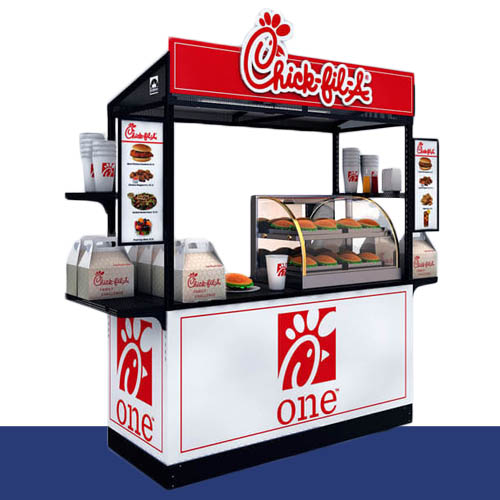
Food Carts (Push Carts)
Food carts are the most accessible entry point, requiring the lowest investment. These compact, maneuverable units are perfect for high-foot-traffic areas like business districts, college campuses, and special events. However, they’re limited in menu complexity and are weather-dependent.
Investment Range: $3,000-$20,000
Best For: Urban areas, festivals, simple menu items
Ideal Menu Items: Coffee, hot dogs, ice cream, simple sandwiches, beverages
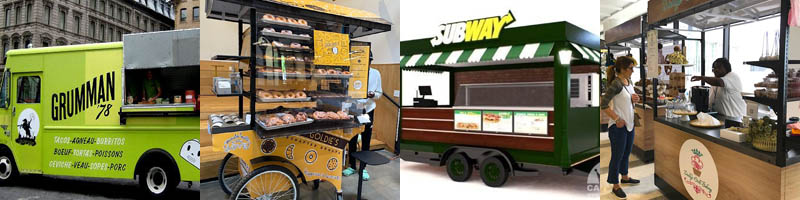
Food Trucks
Food trucks offer the most flexibility and capability, with full kitchen facilities that allow for extensive menu options. The higher investment is offset by greater revenue potential and the ability to serve full meals.
Investment Range: $50,000-$200,000
Best For: Suburban areas, catering, complex menus
Ideal Menu Items: Gourmet burgers, ethnic cuisines, full breakfast/lunch menus
Concession Trailers
Concession trailers provide more cooking space than carts while being more affordable than trucks. They’re perfect for entrepreneurs focusing on events and festivals rather than daily street vending.
Investment Range: $20,000-$80,000
Best For: Festivals, fairs, seasonal events
Food Kiosks
Kiosks offer stability with consistent locations and weather protection, but require securing agreements with property owners and typically involve paying rent or a percentage of sales.
Investment Range: $10,000-$50,000
Best For: Malls, airports, office buildings
Market Research: Finding Your Niche
Success in the food cart business starts with thorough market research. You need to understand your potential customers, identify profitable locations, and find gaps in the existing market.
Analyzing Your Target Market
Understanding your potential customers is essential for menu development, pricing strategies, and location selection that drive profitability. Customer demographics directly influence everything from portion sizes to operating hours, making market analysis a critical foundation for business success.
Demographics to Consider:
Age Groups: Millennials and Gen Z (ages 22-40) represent the primary food cart customer base, accounting for approximately 60% of mobile food purchases. These demographics are more adventurous with food choices, comfortable with social media engagement, and value convenience over traditional dining experiences. They’re also more likely to try new cuisines and share their experiences online, providing valuable word-of-mouth marketing.
Income Levels: Food carts typically serve middle to lower-middle income brackets ($35,000-$65,000 household income), though this varies significantly by location. Understanding income levels helps determine appropriate pricing strategies and portion sizes. Higher-income areas may support premium pricing for quality ingredients, while budget-conscious areas require value-focused approaches.
Work Patterns: Different employment types create distinct customer behaviors. Office workers need quick service during limited lunch breaks but have predictable schedules and steady income. Students seek affordable options and are willing to wait longer for lower prices. Tourists want unique experiences and are less price-sensitive but represent one-time customers rather than repeat business.
Cultural Preferences and Dietary Restrictions: Local demographics significantly influence menu success. Areas with large Hispanic populations may support authentic Mexican cuisine, while health-conscious communities near gyms or yoga studios favor fresh, organic options. Understanding religious dietary requirements, vegetarian preferences, and food allergies helps develop inclusive menus that serve broader customer bases.
Tools for Research:
- U.S. Census Bureau data provides detailed demographic breakdowns by zip code, including age distribution, income levels, employment patterns, and ethnic composition
- Local Chamber of Commerce resources offer business climate information, major employers, and economic development plans that affect customer demographics
- City planning departments provide foot traffic studies, zoning maps, and development projects that influence pedestrian patterns
- Google Maps and reviews reveal competitor locations, customer feedback, and service gaps in existing food options
Why This Research Matters:
Operators who skip demographic research often struggle with low conversion rates despite high foot traffic. A gourmet coffee cart positioned near a factory with shift workers may fail because the target customers prefer quick, inexpensive options over premium beverages. Conversely, a budget-focused operation in an affluent business district might miss opportunities by underpricing quality items that customers would gladly pay premium prices to obtain.
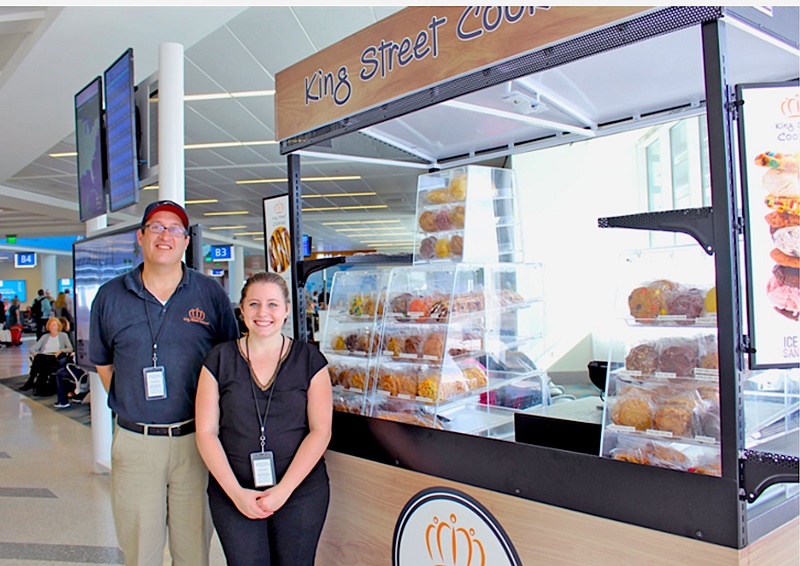
King Street Cookies
Charleston International Airport
Location Analysis Fundamentals
Your location strategy can make or break your food cart business. The difference between a prime spot and a poor location can mean $500 versus $50 in daily sales, making systematic location analysis one of the most critical success factors. Successful operators typically secure 3-5 different permitted locations to maximize revenue opportunities while spreading risk across different customer bases and time periods.
High-Traffic Location Types:
Business Districts: Peak lunch hours (11:30 AM-1:30 PM) create concentrated revenue opportunities when office workers seek quick, convenient meals. These locations offer predictable customer patterns and higher average transactions ($8-$12) but require fast service to accommodate time-constrained customers. The key advantage is consistency, as the same customers return daily.
College Campuses: Consistent student traffic provides steady customer flow throughout the academic year, though revenue drops 50-70% during summer sessions. Students are budget-conscious but frequent purchasers, often buying 3-5 times weekly at lower transaction amounts ($5-$8). Campus locations excel because students are adventurous eaters willing to try new cuisines and share experiences on social media, providing organic marketing benefits.
Tourist Areas: Weekend and seasonal traffic brings customers willing to pay premium prices ($10-$15 average transactions) for convenient, unique experiences. However, these locations face significant seasonal fluctuations and weather dependency. Success requires adapting to tourist preferences for Instagram-worthy presentations and local specialties rather than standard comfort foods.
Events and Festivals: High revenue potential ($500-$2,000 daily) during concentrated periods makes these locations attractive, but they’re highly seasonal and competitive. Success requires advance planning (applications often due 6+ months early), specialized equipment for high-volume service, and menu items suited to celebratory atmospheres.
Key Factors to Evaluate:
Pedestrian Traffic Patterns: Understanding when people walk past your potential location determines operating hours and revenue potential. Business districts peak during lunch hours but become ghost towns by 3 PM, while entertainment districts may be dead until evening. Conducting systematic traffic counts during different times reveals true revenue opportunities versus assumptions based on casual observation.
Competition Density and Market Gaps: Nearby competition affects customer conversion rates and pricing strategies. Areas saturated with lunch options may struggle to attract customers, while others with limited options can support premium pricing. Analyzing competitor operating hours, menu offerings, and apparent success levels identifies opportunities for differentiation or reveals oversaturated markets to avoid.
Operational Logistics: Parking availability for setup and supply delivery affects daily operational costs and efficiency. Locations requiring long walks from parking add time and labor costs, while areas with loading restrictions may prevent adequate supply delivery. These practical considerations significantly impact profitability despite adequate foot traffic.
Commissary Kitchen Proximity: Daily travel between commissary kitchens and service locations affects operational costs and schedule flexibility. Most successful operations stay within 10-15 minutes of their commissary to minimize fuel costs and travel time. Distant locations may offer great customer potential but become unprofitable due to operational overhead.
Regulatory Environment: Local permit availability and costs vary dramatically between locations, even within the same city. Some areas have permit caps limiting vendor numbers, while others face seasonal restrictions or special event requirements. Understanding regulatory requirements before investing time in location analysis prevents disappointment and wasted effort on impossible locations.
Why Location Analysis Matters:
Operators who choose locations based on intuition rather than systematic analysis face a 60% higher failure rate according to industry studies. Successful location analysis combines quantitative data (traffic counts, permit costs, competition density) with qualitative factors (customer demographics, seasonal patterns, operational feasibility) to identify locations that generate sustainable profitability rather than just high visibility.
For a detailed guide on finding and securing profitable locations, see our comprehensive article: Best Food Cart Business Locations
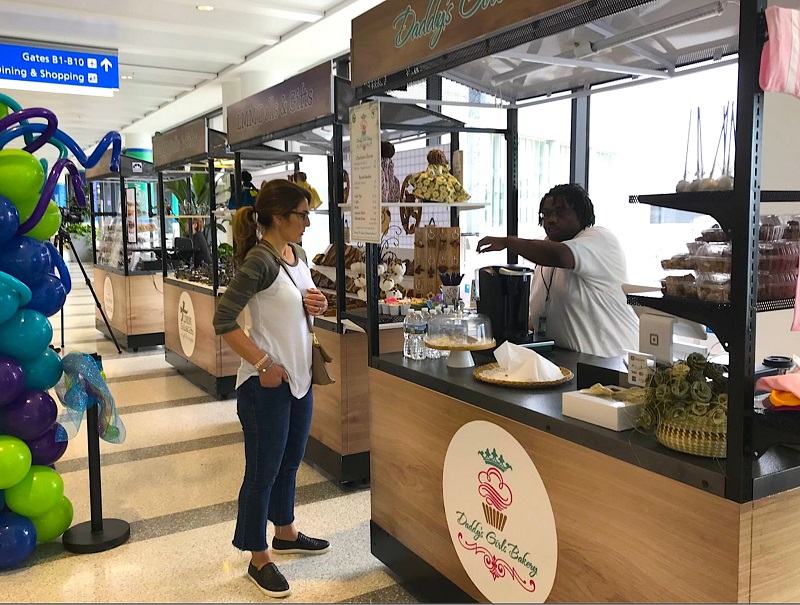
Daddy’s Girl Bakery
Charleston International Airport
Startup Costs: What You Really Need to Budget
Understanding your true startup costs is crucial for securing adequate financing and avoiding the undercapitalization that kills 60% of food businesses in their first year.
Basic Cost Ranges by Business Type
Food Cart Startup Costs: $9,100-$30,300
- Cart purchase/build: $3,000-$15,000
- Equipment: $2,000-$5,000
- Permits and licenses: $500-$2,000
- Initial inventory: $500-$1,000
- Insurance: $800-$1,500
- Working capital: $2,000-$5,000
Food Truck Startup Costs: $71,000-$198,000
- Truck purchase/conversion: $40,000-$120,000
- Kitchen equipment: $15,000-$40,000
- Permits and licenses: $1,000-$5,000
- Initial inventory: $1,000-$3,000
- Insurance: $2,000-$5,000
- Working capital: $10,000-$20,000
Hidden Costs Many Entrepreneurs Miss
- Commissary kitchen fees: $200-$600 monthly
- Daily permit costs: $25-$100 per operating day
- Storage for supplies and equipment: $100-$300 monthly
- Credit card processing fees: 2.5-3.5% of all card transactions
- Maintenance and repairs: 5-10% of equipment value annually
For a complete breakdown of startup costs, financing options, and budget planning tools, read our detailed guide: “Food Cart Startup Costs: Complete Breakdown for 2025”
Legal Requirements and Permits
Navigating the legal landscape is one of the most complex aspects of starting a food cart business. Requirements vary significantly by location, making local research essential.
Essential Permits and Licenses
Federal Level:
- EIN (Employer Identification Number) – Free from IRS
- Food Handler’s Certification – $10-$50
State Level:
- Business license – $50-$500
- Sales tax permit – Usually free
- Workers’ compensation (if hiring employees)
Local Level (Most Complex):
- Health department permits – $100-$500 initial, $100-$300 annual renewal
- Vending permits – $25-$100 daily, $200-$800 monthly, $1,000-$5,000 annually
- Fire department approval – $50-$200
Commissary Kitchen Requirements
Most jurisdictions require food preparation in licensed commercial kitchens. Commissary kitchens typically charge:
- Hourly rates: $15-$30 per hour
- Monthly memberships: $200-$600
- Storage fees: $50-$200 per month
Insurance Necessities
Required Coverage:
- General liability: $300-$800 annually for $1M coverage
- Product liability: $200-$500 annually
- Commercial auto (for trucks): $1,200-$3,000 annually
For state-specific requirements and step-by-step permit application processes, see our comprehensive guide: “Food Cart Permits and Licensing: State-by-State Guide”
Menu Development and Pricing Strategy
Your menu is your primary revenue driver. Strategic menu development focusing on high-margin, quick-service items is essential for profitability.
Menu Strategy Principles
Keep It Simple: Successful food carts typically offer 5-12 items maximum. This enables:
- Faster service (2-3 minute target)
- Lower inventory costs
- Consistent quality
- Easier staff training
Focus on High-Margin Items: Target items with 65-75% gross margins:
- Coffee and beverages: 80-85% margins
- Fried foods: 70-75% margins
- Grilled items: 65-70% margins
Pricing Formula
Menu Price = Food Cost ÷ Target Food Cost Percentage
Example: Gourmet burger with $3.40 food cost
Using 30% target food cost: $3.40 ÷ 0.30 = $11.33 (round to $11.50)
Seasonal Considerations
Seasonal menu adaptation is crucial for maintaining profitability throughout the year, as customer preferences and spending patterns change dramatically with weather and seasons. Successful operators plan seasonal transitions that capitalize on changing demands while managing inventory and operational costs effectively.
Spring/Summer Focus (Peak Revenue Season):
Menu Optimization: Cold beverages become profit drivers, with iced coffees, smoothies, and fresh juices showing 40-60% higher margins than hot alternatives. Refreshing items like fruit-based desserts, cold sandwiches, and salads appeal to customers seeking lighter options during warmer weather. Frozen treats can boost average transactions by $2-4 when positioned as add-ons to main purchases.
Operational Advantages: Extended operating hours capitalize on longer daylight and increased foot traffic, with many successful operators extending service until 8-9 PM during peak summer months. Outdoor events, festivals, and concerts create additional revenue opportunities that can generate 200-400% higher daily sales than regular location service.
Revenue Impact: Summer months typically generate 30-50% higher revenue than winter periods due to increased pedestrian traffic, tourist activity, and customer willingness to purchase from outdoor vendors.
Fall/Winter Focus (Survival and Shift to Indoors):
Comfort Food Strategy: Hot beverages become essential offerings, with coffee sales often doubling during cold months. Comfort foods like hearty soups, stews, and warm sandwiches satisfy customer cravings while offering higher perceived value during challenging weather conditions. Items that can be consumed while walking (handheld warm foods) perform better than plated meals in cold weather.
Operational Adaptations: Reduced operating hours during harsh weather preserve profitability while maintaining customer relationships. Many operators shift to 4-6 hour days during winter versus 8-10 hours during summer. Indoor location alternatives like covered markets, mall food courts, or office building partnerships become essential for consistent revenue.
For complete menu development strategies, cost analysis tools, and pricing optimization techniques, read our detailed guide: Planning Food Cart Menus
Marketing Your Food Cart Business
Marketing for food carts differs significantly from traditional restaurants due to mobility and budget constraints. Success relies heavily on building local awareness and customer loyalty.
Digital Marketing Essentials
Social Media Strategy:
- Instagram: Daily location updates, high-quality food photos, behind-the-scenes content. One great example to get your wheels turning is Jeff’s Amazing Kettle Corn.
- Facebook: Event creation for special locations, customer reviews, detailed hours/location info
- Google My Business: Keep location and hours updated, encourage reviews, post regular updates
Traditional Marketing Tactics
Word-of-Mouth Marketing (Most Effective):
- Exceptional customer service
- Consistent quality
- Memorable interactions
- Referral incentives
Community Engagement:
- Participate in local festivals
- Partner with nearby businesses
- Support community causes
- Sponsor local events
Customer Loyalty Programs
Simple Punch Card Systems:
- “Buy 9, get 1 free” promotions
- Special stamps for higher-value items
- Seasonal bonus punch opportunities
For comprehensive marketing strategies, social media tactics, and customer retention programs, see our detailed guide: “Social Media Marketing: Customer Acquisition on a Budget”
Daily Operations Management
Efficient daily operations ensure profitability and customer satisfaction. Developing standardized procedures is crucial for consistency and quality.
Daily Operational Flow
Pre-Opening (6:00-8:00 AM):
- Pick up supplies from commissary
- Check equipment functionality
- Verify inventory levels
- Post location on social media
During Service:
- Maintain food temperatures
- Monitor inventory levels
- Keep workspace clean
- Engage with customers
- Track sales throughout day
Closing Procedures (5:00-7:00 PM):
- Secure payment processing
- Clean and sanitize equipment
- Return to commissary
- Record daily sales and expenses
Staffing Considerations
Solo Operation: Most food carts start as single-person operations
- Lower labor costs but higher personal demands
- Requires excellent time management
- Limited menu complexity
- Typical owner income: $30,000-$60,000 annually
Two-Person Operation: More efficient service
- Faster service times
- More complex menu possibilities
- Additional labor cost: $15-$20 per hour
For complete operational procedures, staff training protocols, and quality control systems, read our detailed guide: Food Cart Daily Operations and Management
Financial Management and Growth
Sound financial management is crucial for long-term success. Understanding your key performance indicators and cash flow patterns enables strategic growth decisions.
Key Performance Indicators (KPIs)
Monitor these metrics daily:
- Gross Sales: Total revenue
- Transaction Count: Number of customers served
- Average Transaction: Sales ÷ transactions
- Food Cost Percentage: Food costs ÷ sales
- Daily Customer Count: Track repeat customers
Seasonal Cash Flow Planning
Peak Season (May-October):
- Build cash reserves for slow season
- Maximum marketing investment
- Equipment maintenance planning
Slow Season (November-April):
- Reduce operating expenses
- Focus on catering and events
- Business planning and preparation
Growth Strategies
Horizontal Expansion: Adding more carts or locations
- Additional carts: $15,000-$30,000 investment per cart
- Manager hiring and training
- Standardized procedures development
Multi-Location Portfolio Strategy: Managing 3-5 locations simultaneously
- Portfolio mix: 40-50% anchor location, 25-35% secondary locations, 10-20% events
- Scheduling coordination: Weekly templates balancing travel time and peak hours
- Performance tracking: Location-specific profitability analysis and optimization
- Risk diversification: Different customer types, geographic areas, and operating schedules
Vertical Integration: Expanding service offerings
- Catering services: Higher margins, larger orders
- Private events: Weddings, corporate events
- Wholesale products: Packaged goods and sauces
Expansion Financing Options
Growth often requires additional capital beyond initial startup funds. Several financing options can support food cart business expansion:
SBA Loan Programs: The Small Business Administration offers favorable loan terms for established food service businesses looking to expand. SBA Express Loans up to $500,000 and Microloans up to $50,000 provide lower interest rates and longer repayment terms than conventional business loans.
Equipment Financing: Specialized lenders offer equipment loans for additional carts, allowing you to spread costs over 3-5 years while using the equipment as collateral.
Revenue-Based Financing: For businesses with consistent cash flow, revenue-based financing provides capital in exchange for a percentage of future sales, making it suitable for seasonal operations with fluctuating income.
For comprehensive strategies on managing multiple locations, scheduling coordination, and portfolio optimization, see our detailed guide: Food Cart Multi-Location Strategy: Portfolio Management & Optimization.
Common Pitfalls to Avoid
Learning from others’ mistakes can save significant time and money.
Location-Related Mistakes
Insufficient Location Research: Choosing locations based on rent cost alone
Solution: Conduct thorough traffic studies and demographic analysis
Cost of Mistake: $5,000-$15,000 in lost revenue and permit fees
Over-Reliance on Single Location: Putting all efforts into one prime location
Solution: Develop multiple permitted locations for flexibility
Financial Management Pitfalls
Undercapitalization: Starting with minimum required capital
Solution: Have 6-12 months of operating expenses in reserve
Impact: 60% of food business failures in first year
Poor Cost Control: Not tracking food costs and waste
Solution: Daily inventory tracking and waste monitoring
Impact: 5-10% reduction in profitability
Operational Mistakes
Menu Complexity: Offering too many menu items
Solution: Start with 5-8 items and expand gradually
Equipment Over-Investment: Buying expensive equipment before proving demand.
Solution: Start with basic equipment and upgrade based on success
Your 90-Day Launch Timeline
Days 1-30: Planning and Research
- Complete market research in your target area
- Develop detailed business plan and financial projections
- Research all legal requirements and permit processes
- Begin securing funding
- Start building supplier relationships
Days 31-60: Setup and Preparation
- Purchase or lease your food cart and equipment
- Complete all permit and license applications
- Secure commissary kitchen agreement
- Develop and test menu recipes
- Create marketing materials and social media presence
- Obtain necessary insurance coverage
Days 61-90: Launch Preparation
- Complete health department inspections
- Conduct soft opening with friends and family
- Refine operations based on feedback
- Launch marketing campaigns
- Begin regular operations
- Monitor performance and adjust as needed
Industry Outlook and Opportunities
The food cart industry continues to grow, driven by changing consumer preferences and urban development patterns supporting mobile food vendors.
Health and Wellness Focus:
- Growing demand for healthy, fresh options: According to the National Restaurant Association’s industry trends, 67% of consumers actively seek healthier menu options when dining out.
- Ethnic and Fusion Cuisines: Increasing appetite for diverse food experiences
- Technology Integration: Mobile ordering, contactless payments, social media marketing
- Sustainability Practices: Eco-friendly packaging and local sourcing
Long-Term Success Factors
- Quality Consistency: Customers expect the same great experience every visit
- Customer Relationships: Personal connections drive repeat business
- Financial Discipline: Small margins require careful financial management
- Adaptability: Successful operators quickly adapt to changing conditions
- Location Strategy: Success depends heavily on securing the best possible spots
Taking Your Next Steps
Starting a food cart business offers an excellent opportunity to enter the restaurant industry with lower risk and investment than traditional establishments. Success requires thorough planning, adequate funding, and persistent execution.
Key Success Principles:
- Conduct comprehensive market research before investing
- Secure adequate funding to avoid undercapitalization
- Focus on simple, high-margin menu items
- Build strong relationships with customers and regulators
- Maintain detailed financial records and performance tracking
The food cart industry rewards entrepreneurs who combine culinary passion with solid business fundamentals. According to IBISWorld’s Mobile Food Services report, the industry has grown at an annualized rate of 7.9% over the past five years, demonstrating strong opportunities for well-prepared entrepreneurs.
Ready to dive deeper into specific aspects of starting your food cart business? Explore our detailed guides on startup costs, permits and licensing, location strategy, menu planning, marketing tactics, and daily operations management.